
How to Get Rid of a Wasps Nest Safely
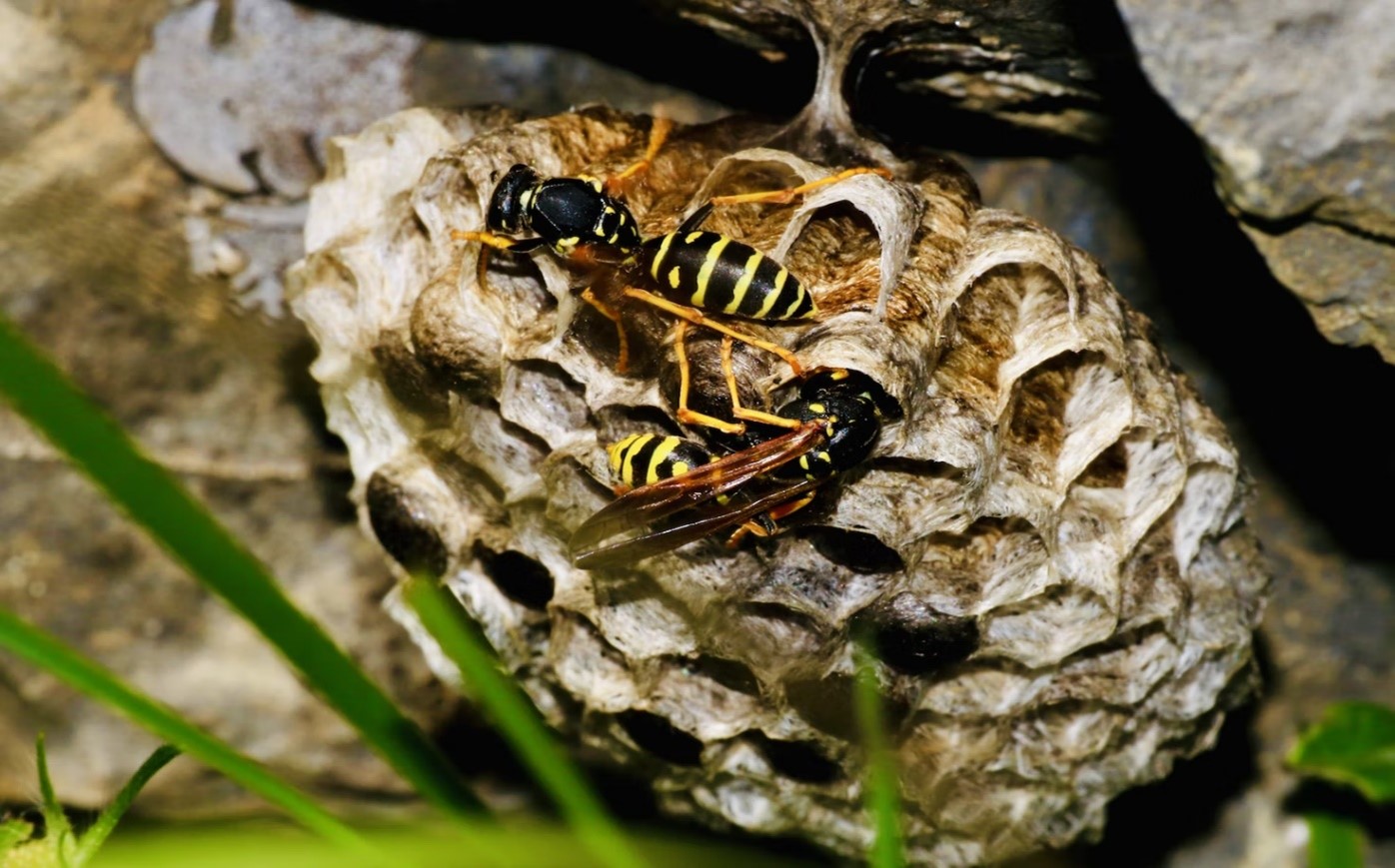
Finding a wasp nest in your garden or near a doorway leading into your home can be intimidating. It’s normal for homeowners to stress, especially if the nest is full of nasty-looking wasps that seem to head in your direction the minute you get close.
Anyone who has ever been stung by a wasp will quickly tell you that a wasp sting can be both painful and annoying. This can easily be made worse by the fact that wasps often sting multiple times. All of this makes wasp nest removal essential as soon as you notice these flying threats.
Locating the Nest
The first step in any wasp removal process involves locating the nest. Fortunately, wasps are less aggressive than bees, so you can usually safely follow them around and see where they go after feeding. Since they often form small groups and fly together in a straight-line formation, it will be quite easy to identify them.
Common places you’ll see wasp nests include:
- Under leaves: Paper wasps create nests under leaves and their nests look like brown paper bags with holes.
- In doorways: Some wasp species make their nests on the top of your doorway or even inside the actual door frame.
- Roof cavities: Wasps can build their nests indoors and outside which means it’s not uncommon to find nests in roof cavities and wall spaces.
- Bird feeders: It’s also common to find wasp nests in or around bird feeders or bird baths.
Points to Consider When Attempting to Remove a Nest
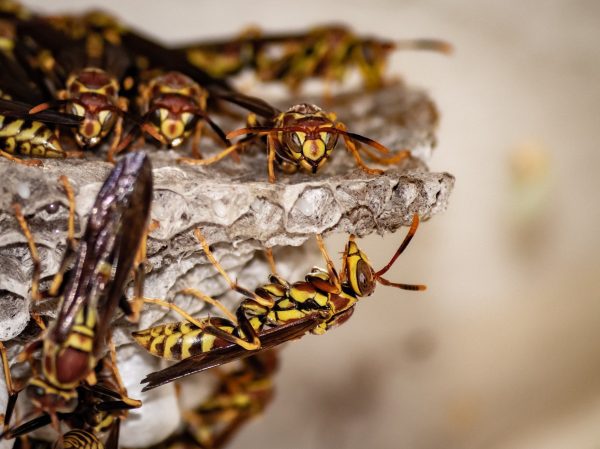
Your first instinct may be to kill the wasps or burn their nest. However, it’s important to keep in mind that wasps are as critical to our ecosystem as bees. As natural pollinators, they play an equally vital role in the environment. Consider removing the wasp nest rather than destroying it.
No matter which option you choose, it’s important to follow a few precautions:
- Wear protective clothing: Tight-fitting, thick clothing will leave little space for entry and will make it impossible for their little stingers to reach you. Don’t forget a pair of heavy-duty gloves.
- Opt to remove the nest at night: Since wasps nest at night you are more likely to get them all in the nest, making it easier to move them. There’s no point in moving an empty nest during the daytime as they will simply create a new one!
- Removal: Use a large plastic container that has a lid. Slide the container over the nest and gently knock it from the surface it clings to. Be sure to keep it as close to the other surface as possible to avoid a lone wasp getting out. Once you have the nest in the container close it with the lid.
- Relocation: Have your relocation plan in place before you remove the nest. Keep in mind that relocating them too close to their old place will likely make them return. However, don’t relocate them to a place where they may harm anyone else. Rather opt for a park or wilderness area that people and pets don’t use much. Set the container on the ground, remove the cover and move away as quickly as you can. If you can slide the nest out of the container without aggravating or waking the wasps, you can do that. Alternatively, you will have to leave the container there. It may be safer than the risk of being stung by several wasps at once!
- Ask the professionals: There are a few instances when you will need to call a Dawson’s pest controller for assistance. If you have an allergy or the nest is quite big it may be a good idea to not take the risk yourself. Our experts have the experience, tools and safety gear to safely remove the next from your property.
Simple Ways to Deter Wasps from Your Home
If you want to keep wasps away, we recommend making a spray with essential oil and a little water. Spray the areas where you’ve previously seen wasps to keep them from building nests.
Spraying these natural sprays on doorways or near roof cavities will also prevent them from coming into your home. The essential oils that have been known to keep wasps away include:
- Peppermint
- Lemongrass
- Clove
- Geranium
- Cinnamon
The Experts are Here to Help
If you have a wasp nest near your home and you’d rather remove it than destroy it, our Dawson’s experts are here to help. It’s as simple as calling us on 03 9222 2266 for a FREE QUOTE.
Our team will assess the problem and safely remove the wasp nest, without any risk to you or your family. It’s the safest and most humane thing to do!



